
Brodo
More stories from Italy, with some chocolate on top

I. Brodo
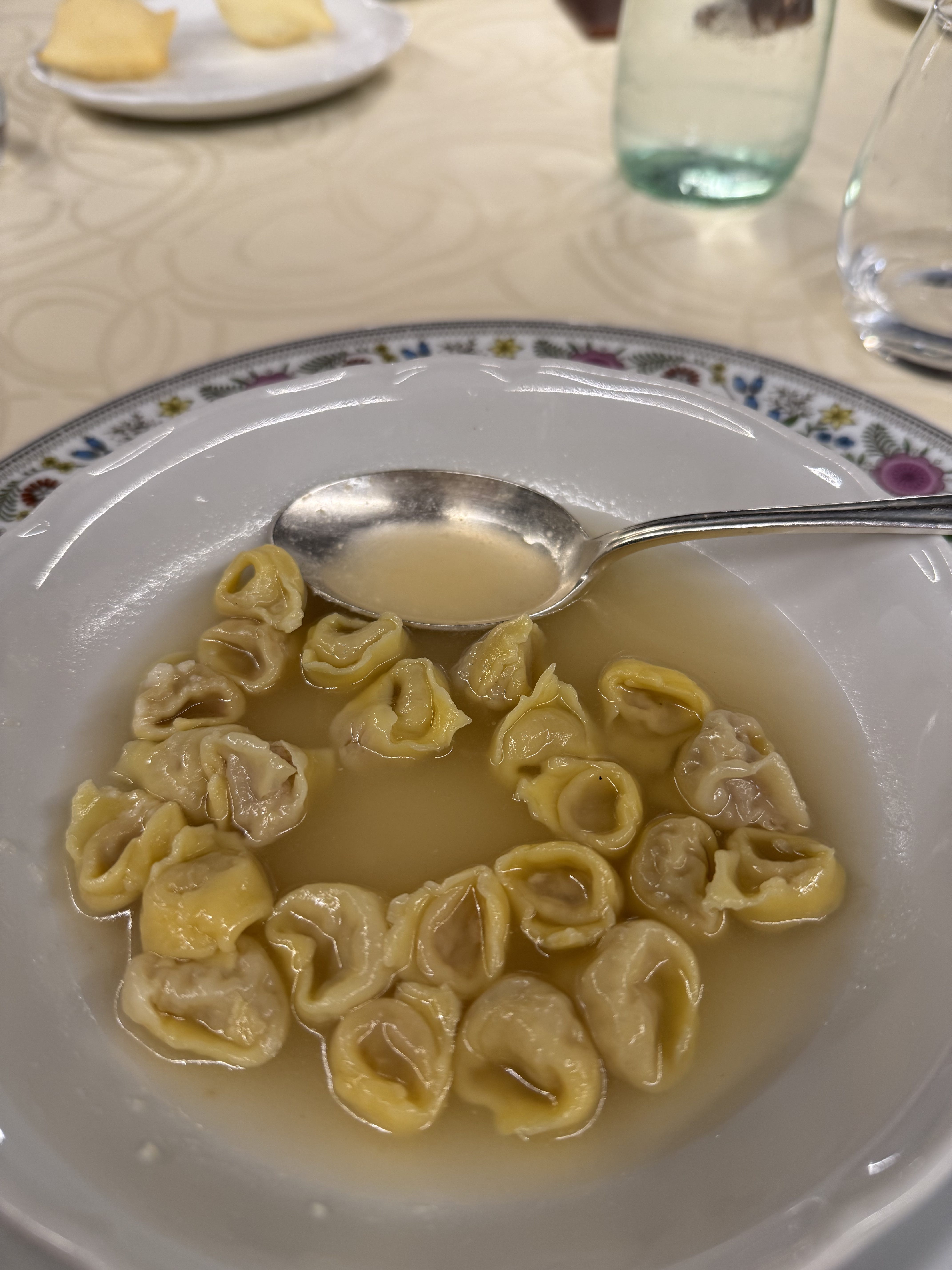
What is home? Is it a place, a language, a person? I have lived an international life in London for over eight years, and most people around me have no straightforward answer to that question. I am no different — my answer is nuanced, reflecting the complexity of my origins — but there is an instinctive one that comes to mind immediately. Home is a dish. Tortellini in brodo. I don’t remember the exact first time I had it, but I can picture one of those long Sunday afternoons at my grandparents’ house. Small tortellini stuffed with parma ham served in a steamy chicken broth that never failed to make us sweat profusely. Freshly grated Parmigiano on top. No other combination of flavours comes close to this perfect comfort, and I never seem to get enough of it.
My grandfather Walter Alberghini — Nonno to us — was Italian. Raised in Finale Emilia, a small village just an hour from Bologna, he eventually made his way to Belgium, where he started a life with my grandmother Ida. He was impeccably dressed, proud of his roots, and never forgot where we came from. Both Nonno and my grandmother were excellent cooks and so is my mother. She holds onto our Italian roots tightly, and I realised early how lucky I was to grow up with such a rich culinary heritage. The joy on my friends' faces when they came for dinner remains one of my favourite childhood memories. When it wasn't tortellini in brodo, it was pasta al ragù, parmigiana, osso buco, or lasagna. My mum has her favourite supermarkets in Italy that she visits every year, carefully picking out the best pasta, passata, and olive oil. Her cupboards are always full, and my sister and I still love opening them up to admire the carefully sourced goods.
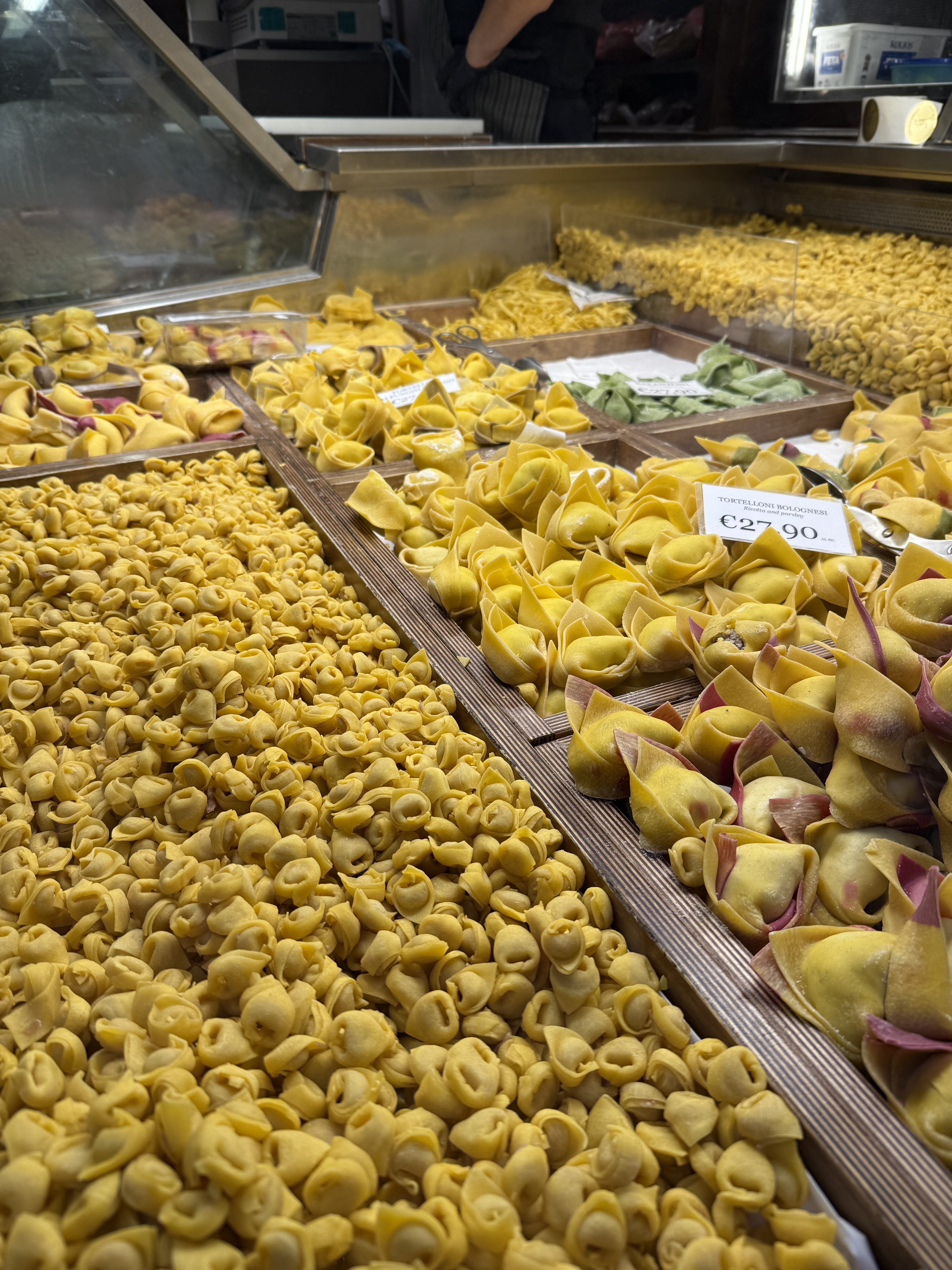
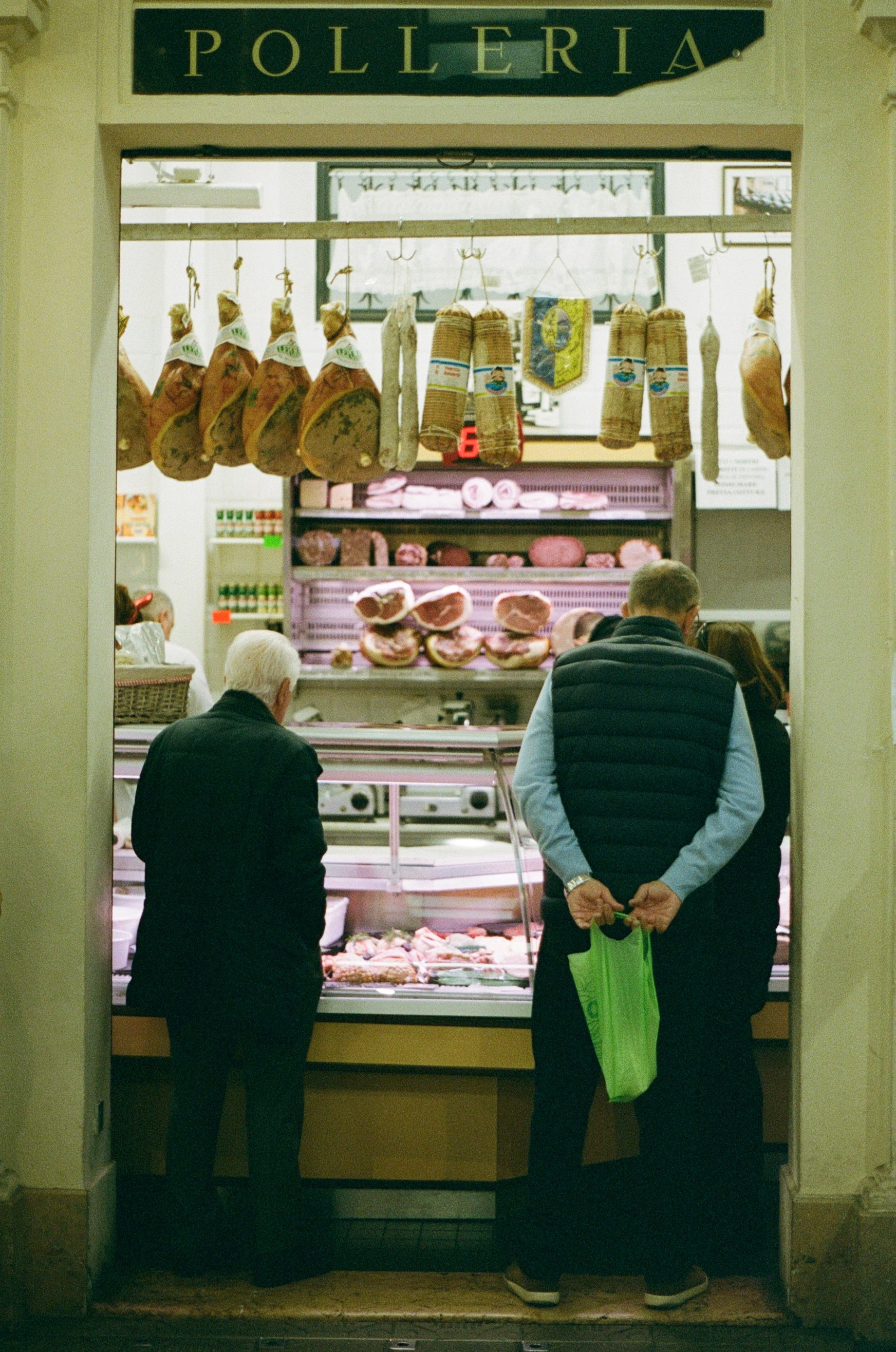
We planned a trip to Emilia-Romagna in autumn to celebrate my mum’s birthday. At the heart of the long weekend was a reservation at Massimo Bottura’s Osteria Francescana. The meal was wonderful — a window into the chef’s art and soul — but my family seemed to prefer the region’s more traditional, simpler food. We walked all over Modena, exploring its legendary Mercato Albinelli. The sights and smells of local produce were irresistible — mortadella, ham, cheese, fruit, and freshly made pasta of all shapes — including, of course, tortellini.
We stopped in Finale Emilia, where Nonno is buried, on a beautifully sunny day. We visited him and his relatives at the cemetery with our cousins who still live in town. And then we did what we do best: gathered around a long table and shared an indulgent meal for hours, before making our way to Bologna.


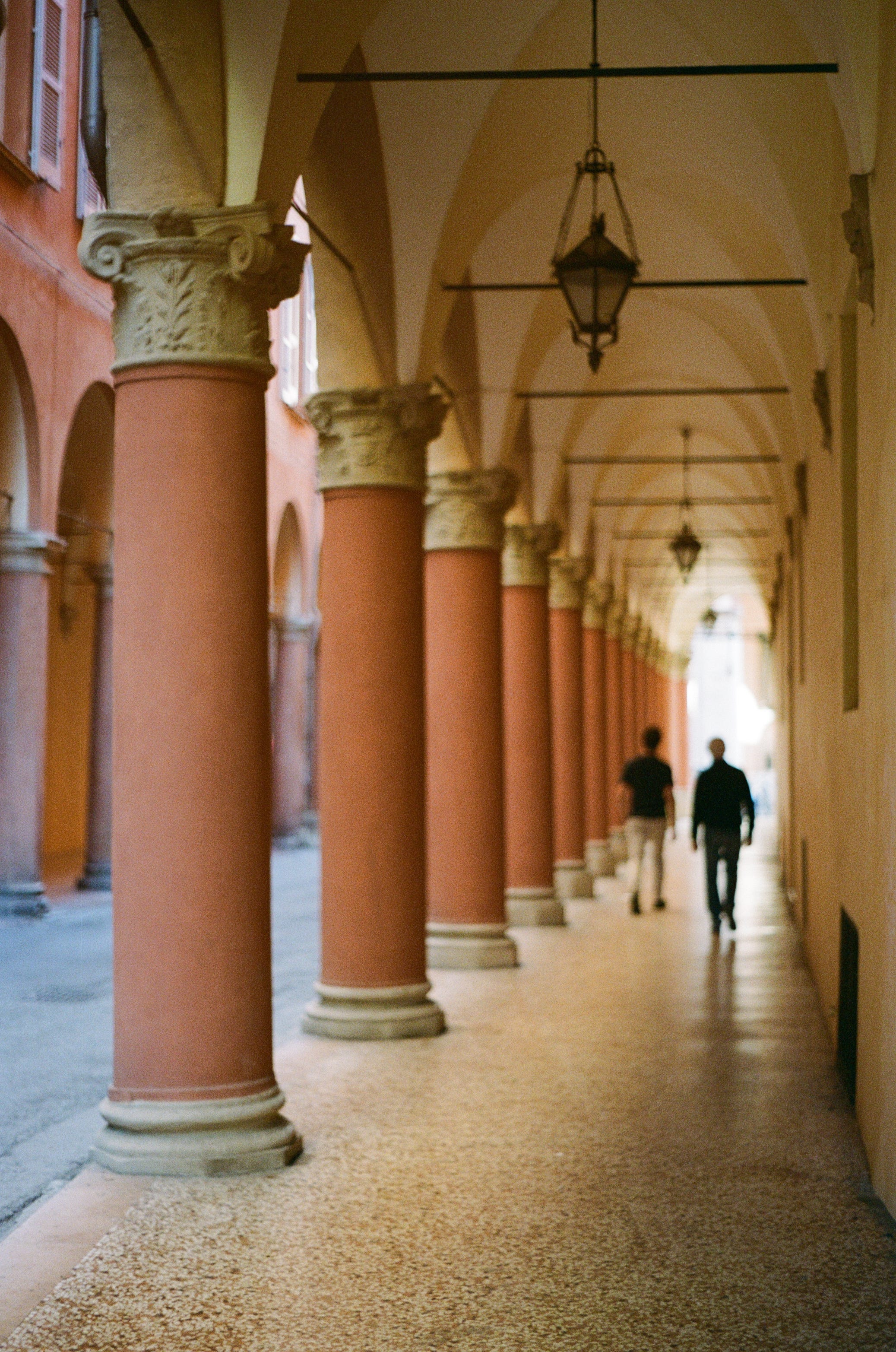
We immediately started exploring the city’s trattorias and delis, featuring mortadella-filled tigelle and world-class pasta. Despite its welcoming and unpretentious atmosphere, Emilia-Romagna exudes pride and respect for its culinary culture — it's what everyone talks about, and for good reason. We loved our meals at Ristorante Da Cesarina, La Montanara and Tamburini, serving homemade taglitelle al ragù, freshly cut charcuterie, gramigna con salsiccia, oven-baked lasagnas, and tiramisù.
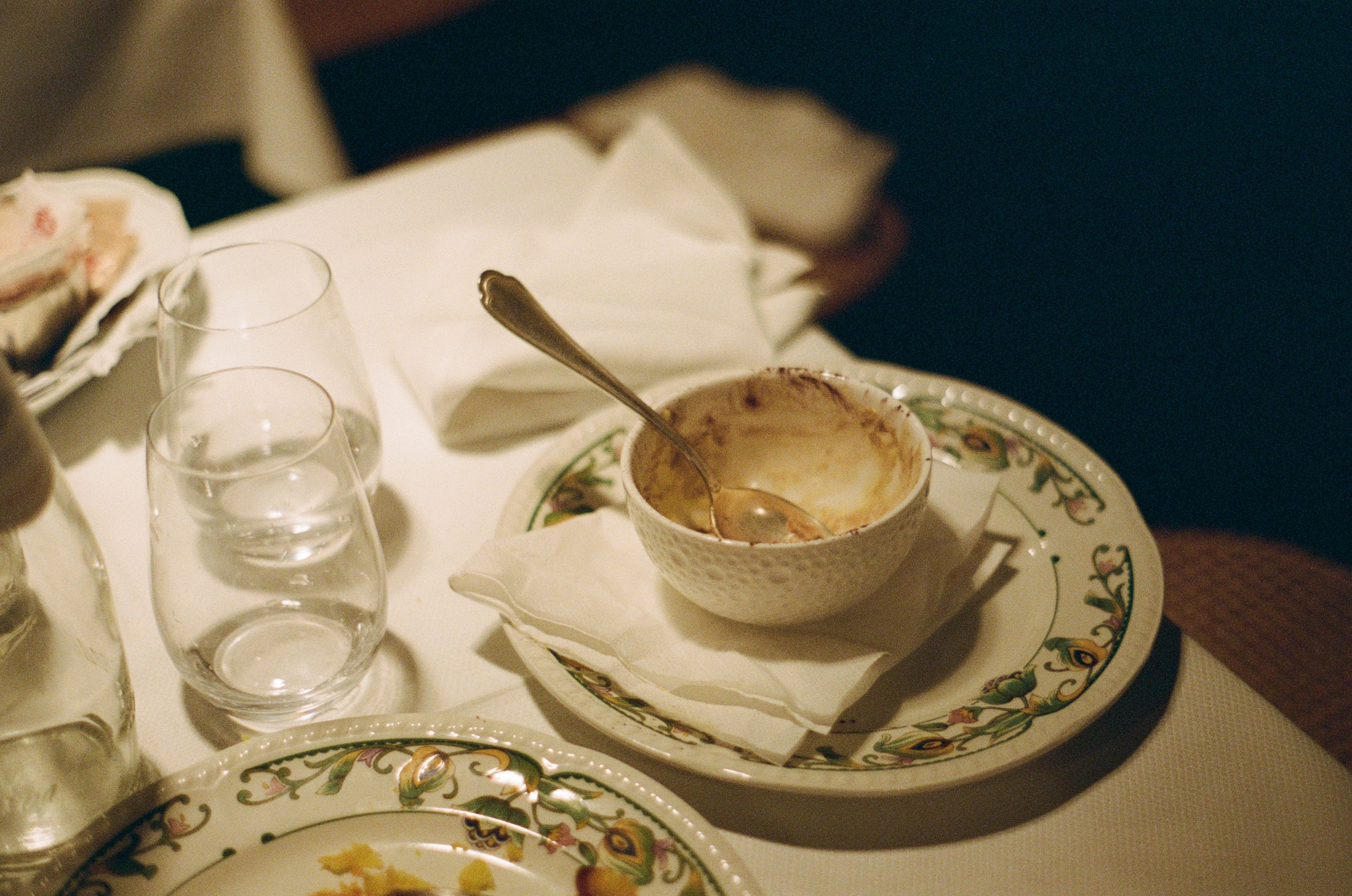
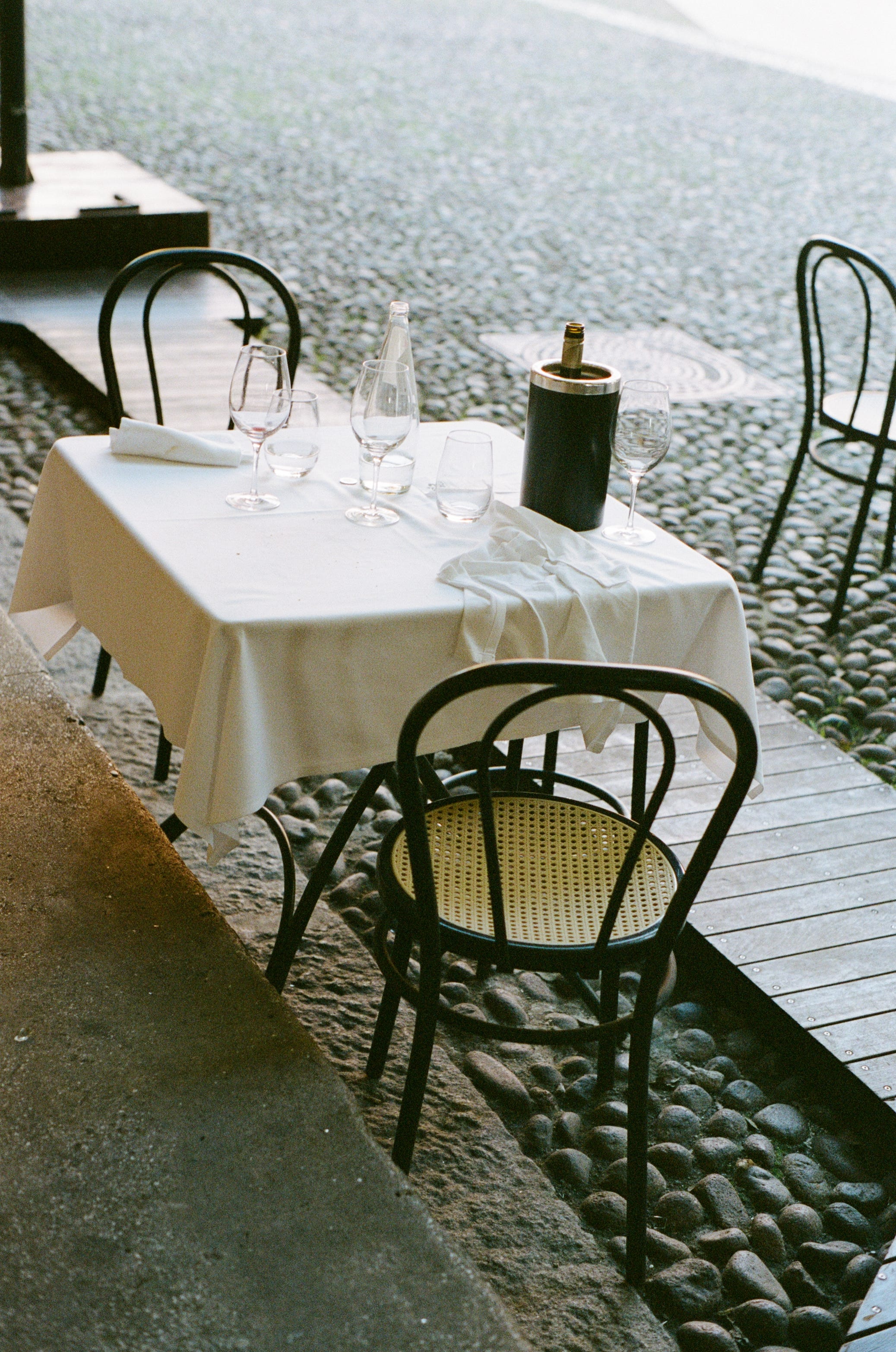
At the end of the weekend, we all agreed on the best meal of the trip — though none of us could remember the name of the place that served it. It was on the day of our 12-course lunch at Osteria Francescana. We hadn’t planned anything for dinner assuming we would still be full, but were hungry again by evening. Our hotel was just outside Modena on a regional road, and as we wandered out, we stumbled upon an unassuming roadside restaurant. It had warmly lit tables, white tablecloths and a cheese trolley. We were seated immediately and ordered our favourites: tortellini in brodo, tortellini alla panna, tagliatelle al ragù. We were silent as we took our first bites — the steamy broth, freshly grated Parmigiano, and perfect tortellini tasted like home.
II. Lara
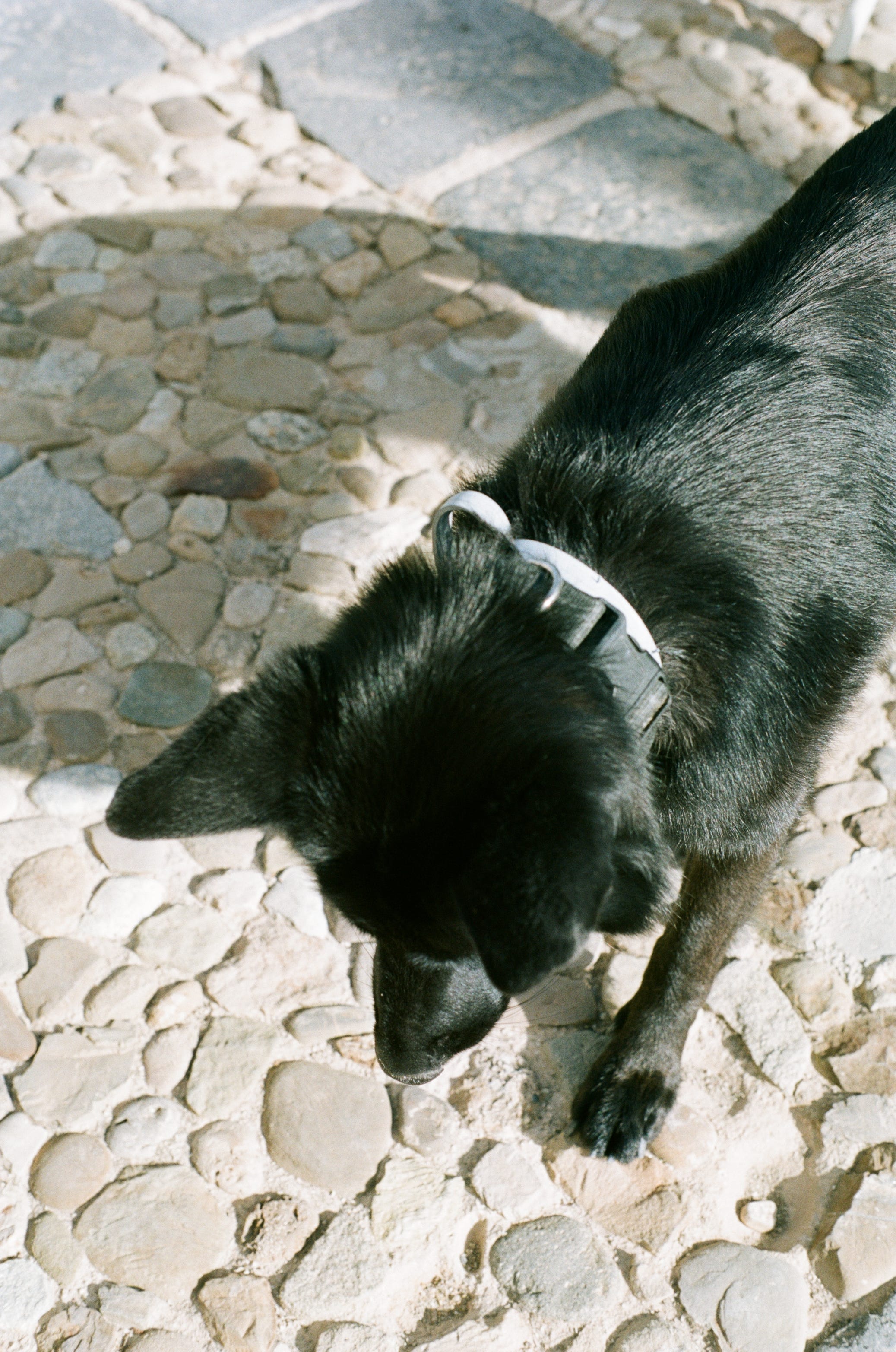
Earlier this year, on another short trip to Italy, we made a strange encounter. Her name was Lara. She was a dog and we immediately noticed something unusual about her.
We first saw Lara as we arrived at her home: Mandranova, a stunning family-run farm in the south of Sicily. We were visiting the region for a week and, traveling off-season, had only booked the first stop of our trip. From the outset it was clear that Mandranova was a special place.
Lara greeted us in the parking lot and followed us to our room, wagging her tail. She wouldn’t leave our side and seemed to enjoy our company, but something was off. She never looked at us. Instead, she stared intently at the floor, as if looking for something. It wasn’t fear — at least not in the conventional sense — but there was an intensity to her focus. The only explanation that made sense to me struck me like a revelation:
She thinks shadows are real!
I couldn’t un-see it. Lara tracked our shadows obsessively, her eyes fixed on the floor. Even the slightest movement, the play of the wind on the curtains of our room, captivated her. And still, she wouldn’t look up. We kept trying to engage in the hope of making eye contact. Ciao Lara! we called repeatedly. Either my diagnosis was correct, or our Italian was so bad that she couldn’t comprehend our attempts to engage.
We sat down for dinner that evening. The farm’s chef, Gabriele, son of the owners Giuseppe and Silvia, designed and cooked a beautiful set menu every night using only local produce, for about €40 a head. We were excited to eat and dipped our bread into their divine, homemade olive oil — Nocellara for me, Coratina for Mr — when the owner Giuseppe stopped by our table for a friendly chat. I couldn’t resist bringing up Lara, who had settled by our side once again. “Ah, poor Lara,” Giuseppe said, shaking his head. “The shadows! She doesn’t know they’re not real. It’s very sad; she spends all day chasing them. She’s a kind dog, but she’s stuck.”


I was right (and briefly considered a career as an animal psychologist). Day after day, I watched Lara — always present, but not really. I became obsessed with her obsession. It felt like more than a quirky trait — like a symbol, or a message. Don’t we do this too? Get so fixated on our own representations of reality — our fears, historical narratives, and limiting beliefs — while missing out on the richness of the present moment? How often do we project a less vibrant, less colourful version of the world onto the two-dimensional plane of our minds, for reasons that are invisible to others? Her story stayed with me. She became the inspiration for the question I’ve asked myself and others ever since: in which ways are you being your own worst enemy? And how can we change that?
III. Cravings
If you know me, you know I’m obsessed with chocolate. I’m lucky to know Spencer Hyman, founder of Cocoa Runners and one of the most knowledgeable people in the world about chocolate. Subscribing to their monthly boxes of craft chocolate has been a highlight of my year. By “craft,” they mean small-batch, flavour-focused chocolate that prioritises the quality and origin of the beans — knowing where they come from and how they’re farmed. The Cocoa Runners marketplace is exceptional, and their chocolate is better for our health, the environment, and industry workers. And it’s just so much fun to dive deeper into the world of chocolate. If this sounds intriguing, here’s a discount code for their website: LOLACR10. I personally don’t get any reward or make any money on this, so I'm genuinely just sharing out of passion. Their chocolates make fantastic Christmas presents, and they also run tasting sessions, both in-person and online. I’ve attended a couple and now fancy myself a chocolate sommelier in training.
Thank you for being here,
Lola
Amazing read.